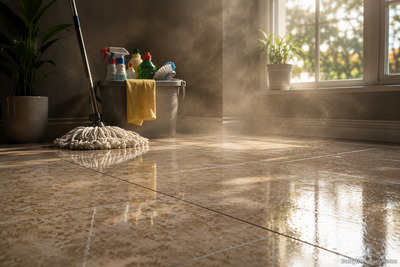
How to Clean Ceramic Tiles: The Complete Guide
Ceramic tiles have earned their reputation as one of the most practical flooring and wall materials available today. They're durable, attractive, affordable, and easy to maintain, making them a favorite choice for kitchens, bathrooms, hallways, laundry rooms, and even commercial spaces.
But while ceramic tiles are known for being low maintenance, they're not maintenance-free.
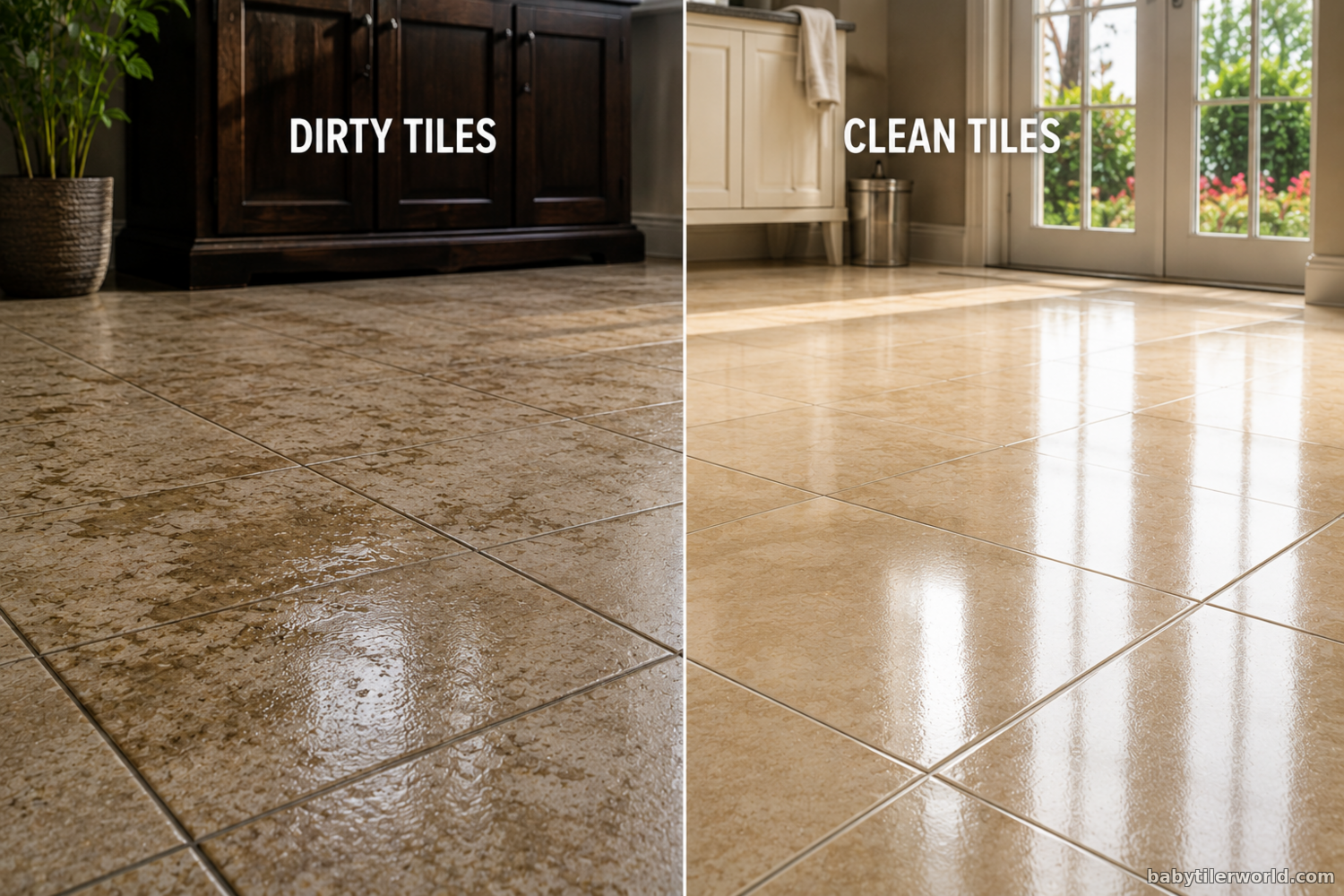
Over time, dust, grease, soap residue, hard water minerals, spills, and foot traffic can dull the surface. Grout lines gradually become darker, bathroom tiles develop soap scum, and kitchen floors collect invisible layers of grease that ordinary mopping often fails to remove.
The good news is that restoring ceramic tiles doesn't require expensive products or professional equipment. With the right cleaning methods and a consistent routine, your ceramic tiles can stay beautiful for decades.
In this comprehensive guide, you'll learn:
* The best way to clean ceramic tile floors
* How to clean ceramic wall tiles
* How to remove grease, soap scum, and stubborn stains
* The safest homemade cleaning solutions
* How to clean dirty grout
* Mistakes that can permanently damage ceramic tiles
* Professional maintenance tips
Let's begin.
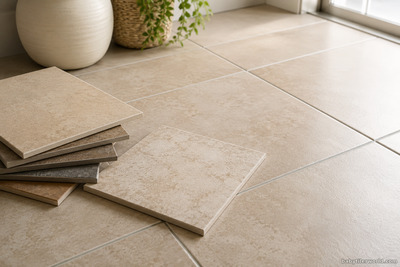
What Are Ceramic Tiles?
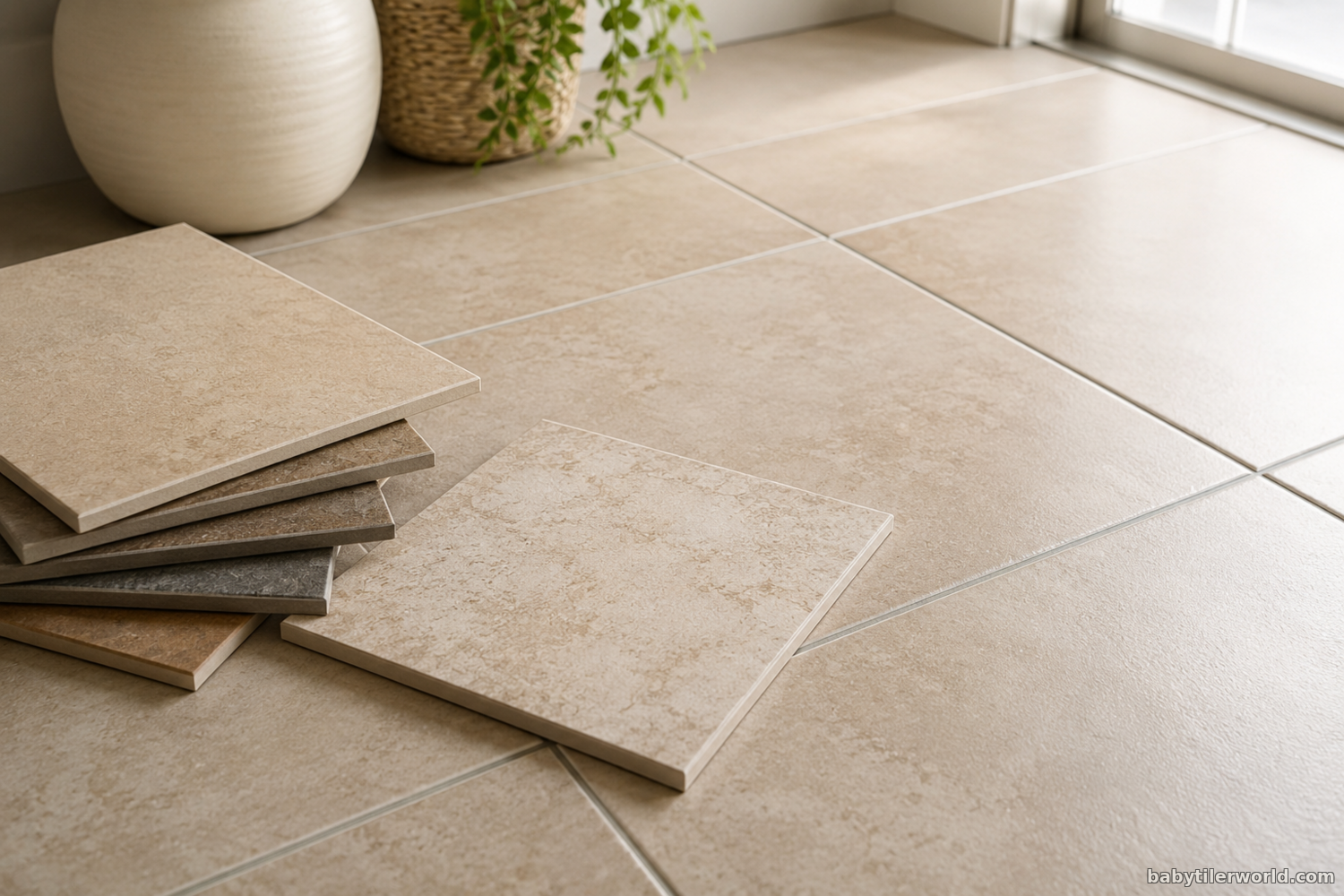
Ceramic tiles are manufactured from natural clay that is molded, dried, and fired in a kiln at extremely high temperatures. Most ceramic tiles are coated with a protective glaze that creates a smooth, waterproof surface.
This glaze is what makes ceramic tiles:
* Resistant to stains
* Easy to wipe clean
* Water resistant
* Durable
* Attractive
* Hygienic
Unlike carpet or wood, ceramic tiles don't trap allergens or absorb odors, making them an excellent choice for households with pets, children, or allergy sufferers.
However, the grout between the tiles is a different story.
Grout is porous, meaning it absorbs moisture, oils, dirt, and bacteria much more easily than the tile itself.
That's why grout usually becomes dirty long before the ceramic tile does.
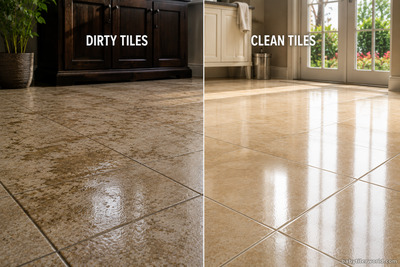
Why Regular Cleaning Is Important
Cleaning ceramic tiles isn't only about appearance.
Regular maintenance helps:
* Remove bacteria
* Prevent mold growth
* Reduce allergens
* Protect grout
* Prevent slippery floors
* Extend the life of the installation
* Preserve the tile's original shine
Ignoring dirt allows grime to build layer after layer until ordinary cleaning no longer works.
Routine cleaning prevents this from happening.
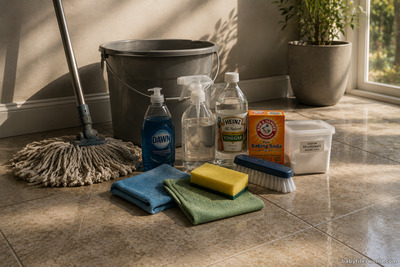
Supplies You'll Need
One of the biggest misconceptions about tile cleaning is that you need specialized chemicals.
Most homeowners already have everything they need.
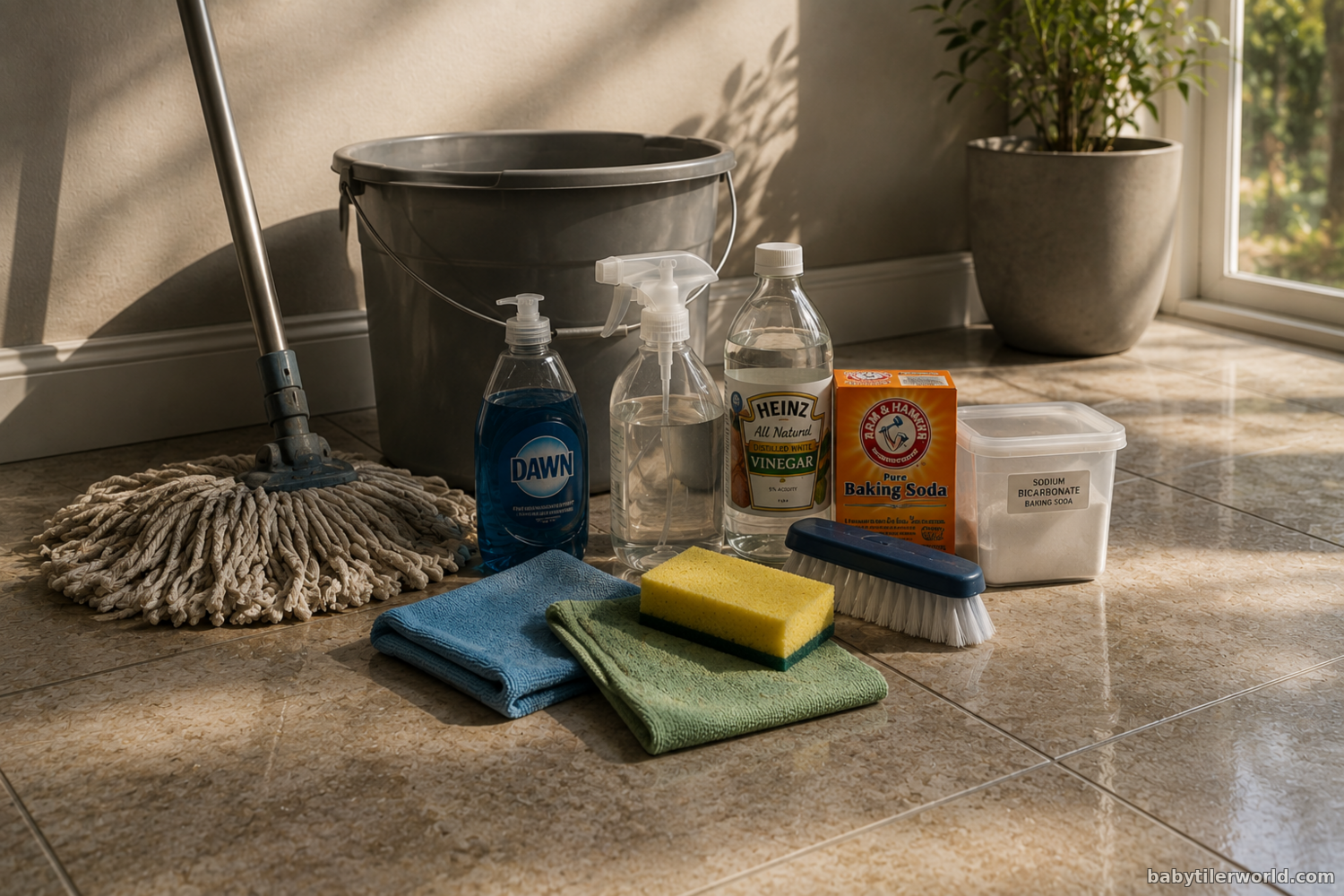
Basic Cleaning Supplies
* Soft broom
* Vacuum cleaner
* Microfiber mop
* Bucket
* Warm water
* Mild dish soap
* Soft sponge
* Microfiber cloth
* Soft-bristle brush
* Spray bottle
Optional Supplies
* White vinegar
* Baking soda
* Hydrogen peroxide (for stained grout)
* Commercial pH-neutral tile cleaner
Avoid:
* Steel wool
* Wire brushes
* Abrasive scrub pads
* Harsh acids
* Oil-based cleaners
These products can scratch the glaze or weaken grout over time.
Step 1: Remove Loose Dirt
Before adding water, always sweep or vacuum.
Tiny particles of sand and grit act like sandpaper under a mop.
If skipped, you're essentially rubbing those particles across the tile surface.
Pay special attention to:
* Doorways
* Corners
* Under furniture
* Kitchen cabinets
* Baseboards
A microfiber dust mop also works well for daily cleaning.
Step 2: Prepare a Gentle Cleaning Solution
The best cleaner for ceramic tiles is surprisingly simple.
Mix:
* 1 gallon (about 4 liters) of warm water
* A few drops of mild dish soap
That's it.
More soap isn't better.
Too much detergent leaves a sticky film that attracts dust and causes dull-looking floors.
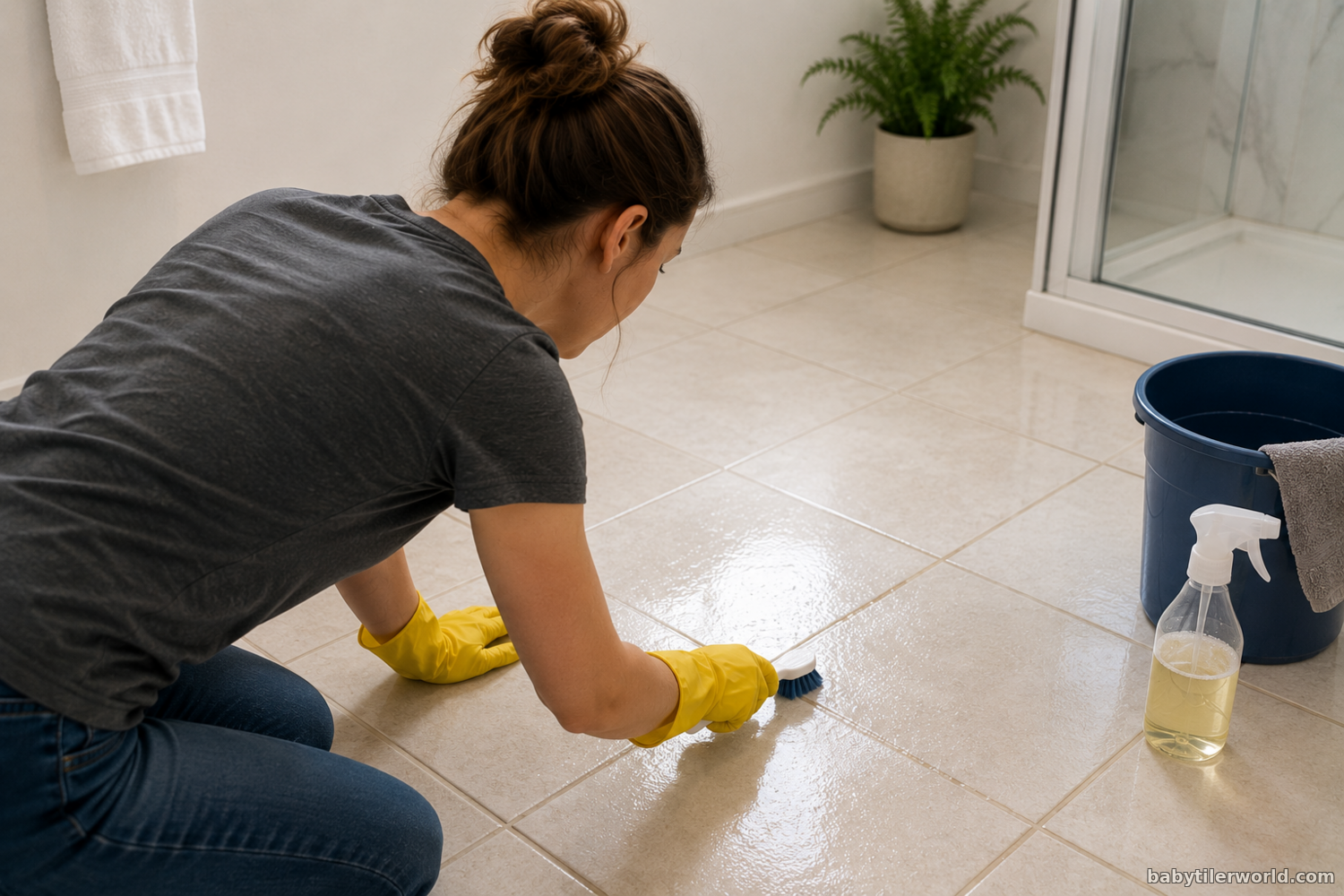
Step 3: Mop the Tiles Properly
Dip the microfiber mop into the solution.
Wring it thoroughly.
The mop should be damp, not dripping.
Excess water:
* Penetrates grout
* Leaves streaks
* Takes longer to dry
* Encourages mildew
Work in sections.
Start at the far end of the room and move toward the exit.
Step 4: Rinse with Clean Water
This is the step many homeowners forget.
Soap residue gradually builds up if the floor isn't rinsed.
Fill a second bucket with clean warm water.
Go over the floor again.
This simple step restores the tile's natural shine.
Step 5: Dry the Surface
Although ceramic tiles resist water, drying them provides several benefits.
Drying:
* Prevents water spots
* Eliminates streaks
* Reduces slipping
* Leaves a polished appearance
Use a clean microfiber cloth or dry mop.
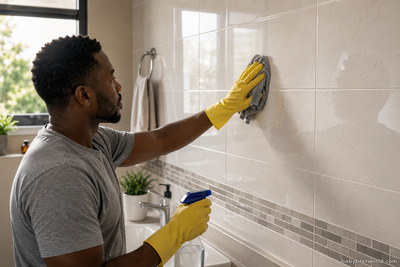
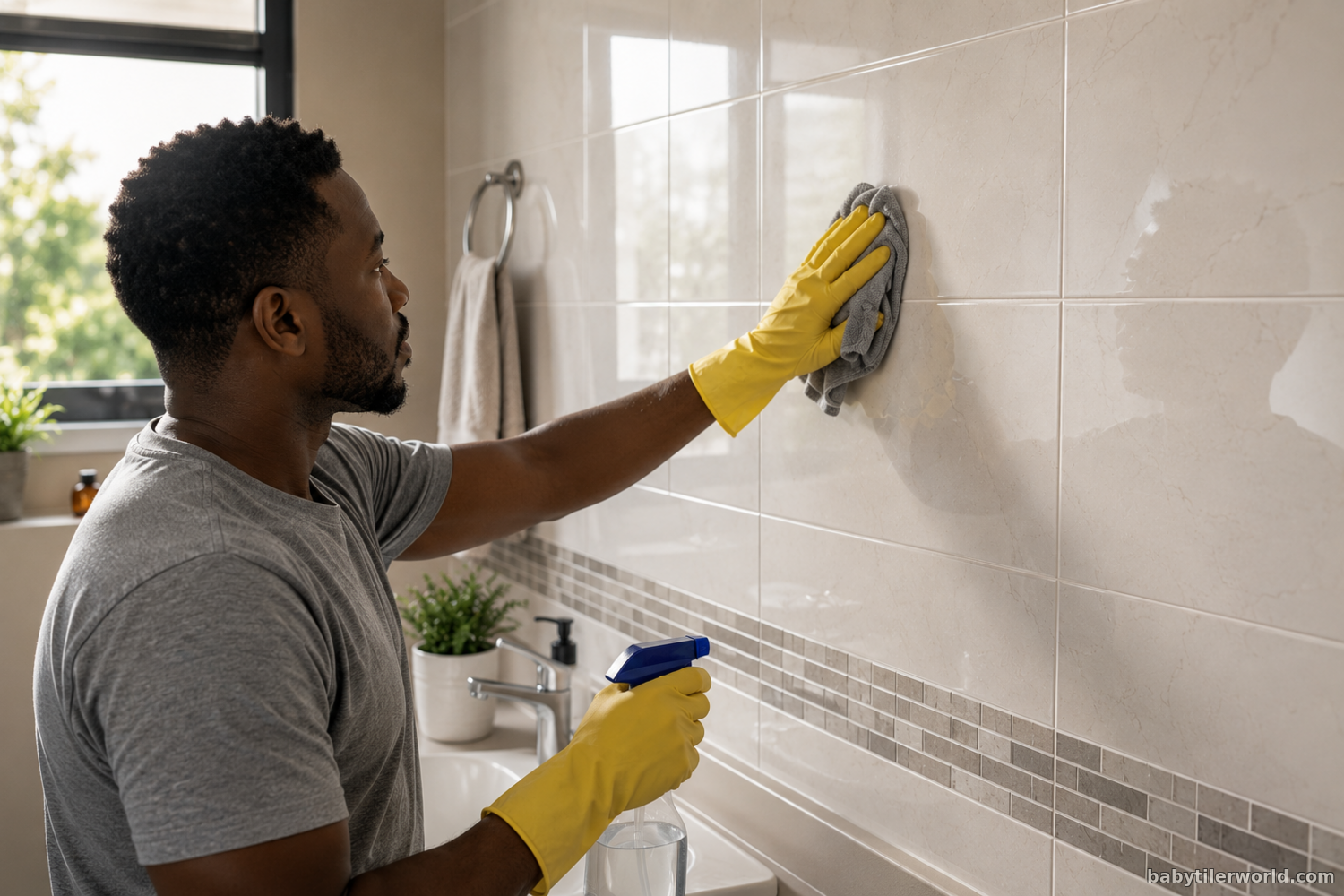
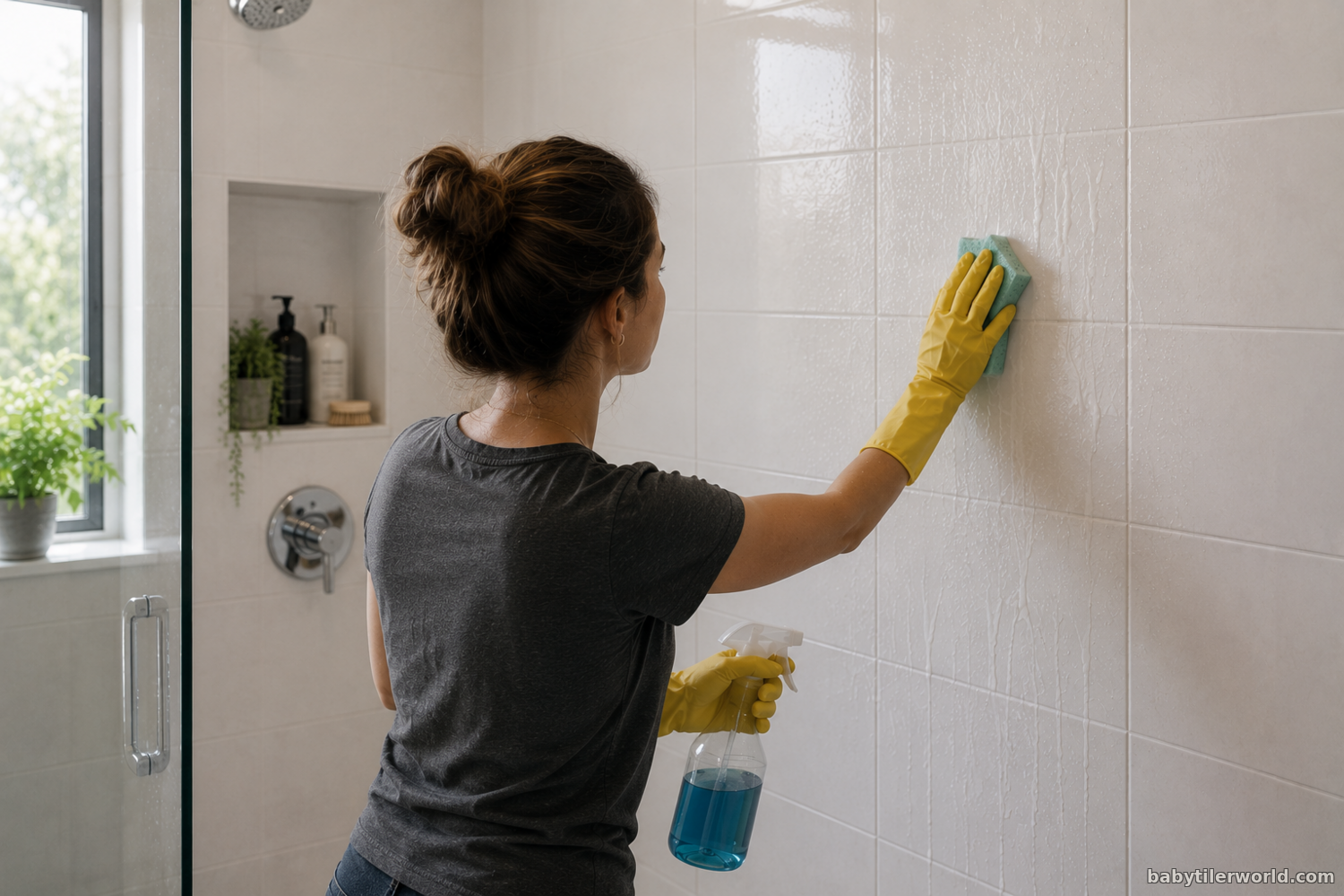
How to Clean Ceramic Wall Tiles
Wall tiles collect very different types of dirt than floors.
Kitchen walls collect grease.
Bathroom walls collect soap scum.
Cleaning is simple.
1. Spray a mild cleaning solution.
2. Let it sit for two to three minutes.
3. Wipe using a microfiber cloth.
4. Rinse with clean water.
5. Dry immediately.
Always work from top to bottom.
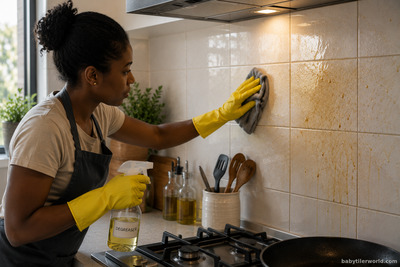
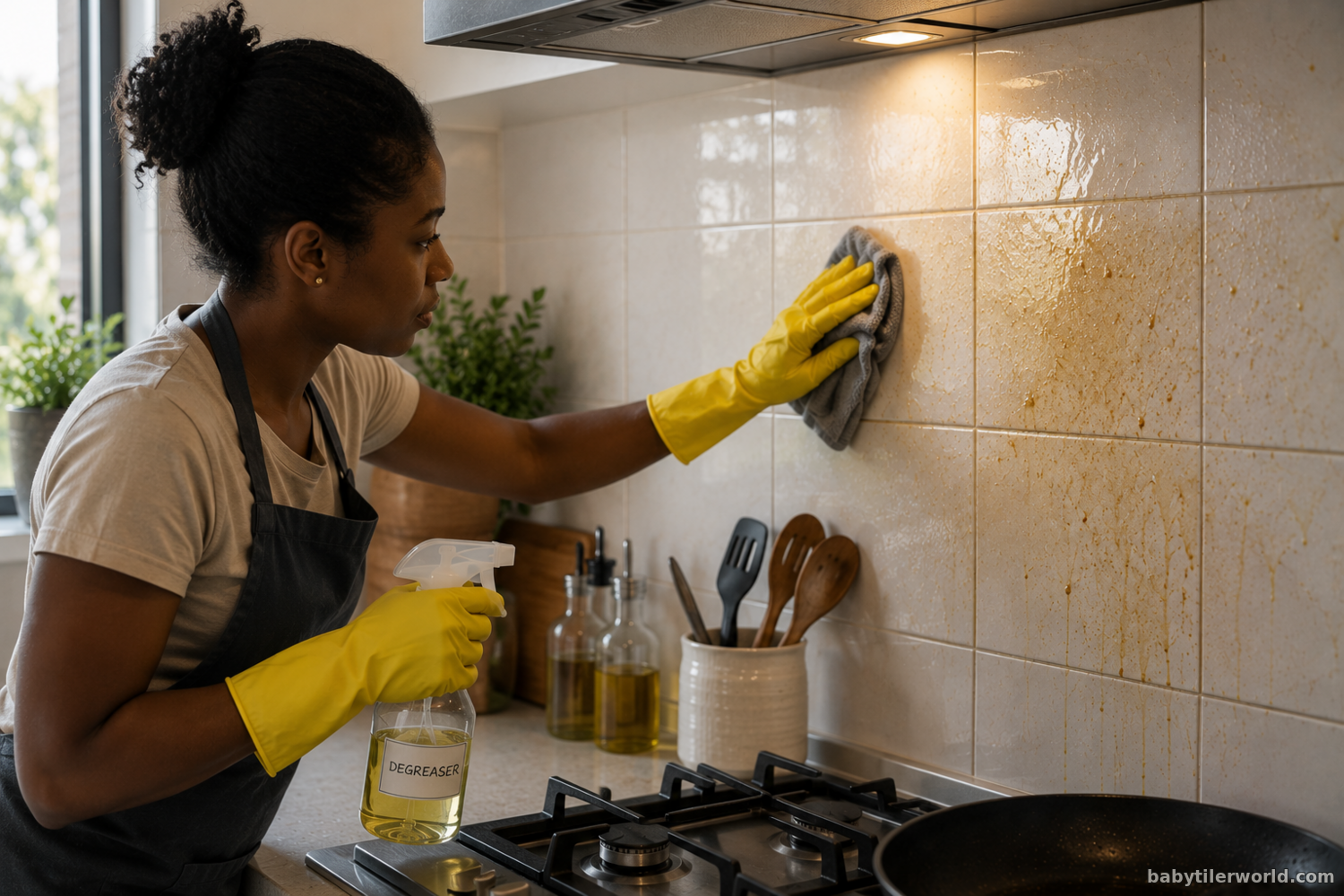
How to Remove Grease from Ceramic Kitchen Tiles
Cooking releases microscopic grease particles that settle on nearby surfaces.
Over time, these layers become sticky.
The best solution is warm water mixed with grease-cutting dish soap.
Spray generously.
Allow it to sit for five minutes.
Wipe gently using a soft sponge.
Repeat if necessary.
Avoid using harsh degreasers unless recommended by the tile manufacturer.
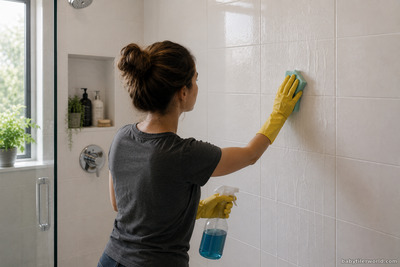
How to Remove Soap Scum
Soap scum forms when soap reacts with minerals in hard water.
It leaves a cloudy white film.
For glazed ceramic tiles:
Mix equal parts white vinegar and warm water.
Spray the affected area.
Leave for several minutes.
Wipe clean.
Rinse thoroughly.
Dry immediately.
Important: Never use vinegar on natural stone surfaces.
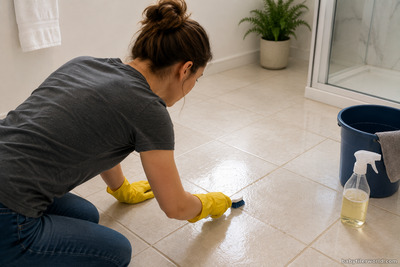
How to Clean Ceramic Tile Grout
Most "dirty tile" complaints are actually dirty grout.
Grout is porous and naturally absorbs:
* Dirt
* Oil
* Food spills
* Soap residue
* Mold
One of the safest cleaning methods uses baking soda.
Baking Soda Method
Mix:
* Baking soda
* Small amount of water
Create a thick paste.
Apply directly onto grout.
Allow it to sit for 15 minutes.
Scrub gently using a toothbrush.
Rinse with warm water.
Dry thoroughly.
Removing Tough Grout Stains
If baking soda isn't enough, hydrogen peroxide may help remove stubborn stains.
Apply a small amount.
Allow several minutes.
Gently scrub.
Rinse completely.
Avoid repeated use of harsh bleach because it may weaken grout over time.
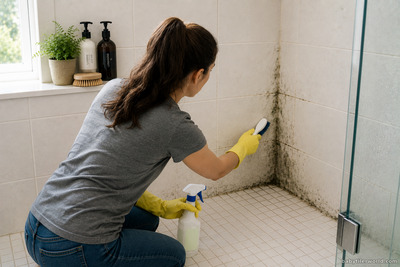
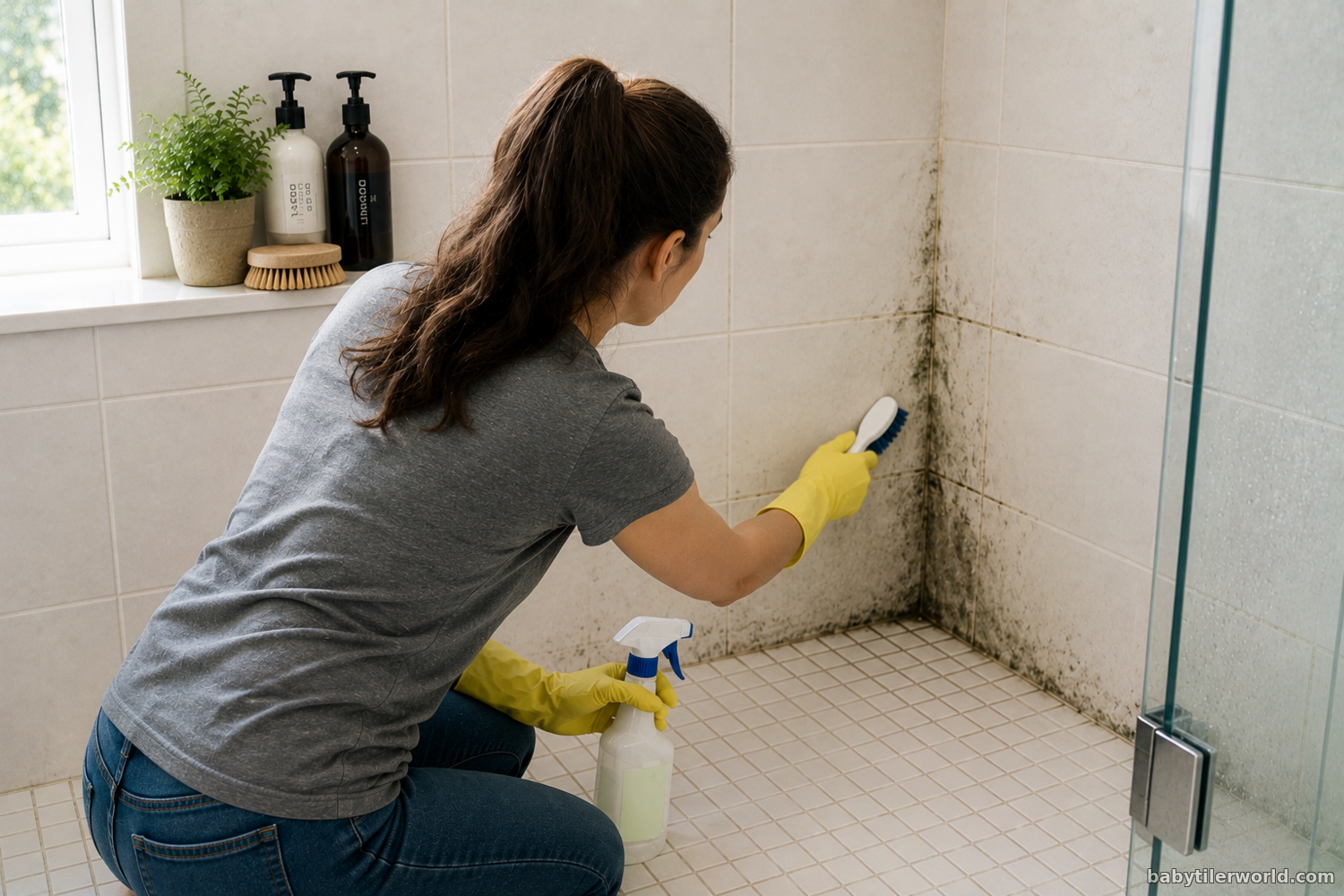
Removing Mold and Mildew
Bathrooms naturally create humid environments.
To reduce mold:
* Run exhaust fans
* Open windows
* Wipe shower walls
* Dry wet floors
For existing mildew:
Use an appropriate mold-removing cleaner according to the manufacturer's directions.
Always wear gloves and ensure good ventilation.
Never mix bleach with vinegar or ammonia.
Removing Hard Water Stains
Hard water leaves white mineral deposits.
These deposits become more noticeable over time.
For glazed ceramic tiles:
Use diluted white vinegar.
Allow it to sit briefly.
Wipe clean.
Rinse thoroughly.
Dry immediately.
Routine cleaning prevents heavy mineral buildup.
Cleaning Different Types of Stains
Coffee
Use warm water and mild detergent.
Clean immediately before staining sets.
Mud
Allow the mud to dry first.
Sweep away loose dirt.
Then mop normally.
Juice
Blot immediately.
Clean with warm water and dish soap.
Pet Accidents
Clean immediately.
Disinfect using a tile-safe cleaner.
Dry thoroughly.
Paint
Water-based paint usually removes with warm water before it cures.
For dried paint, follow the paint manufacturer's guidance and test any remover in an inconspicuous area first.
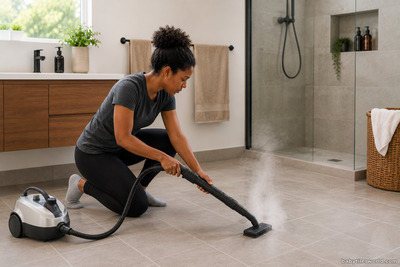
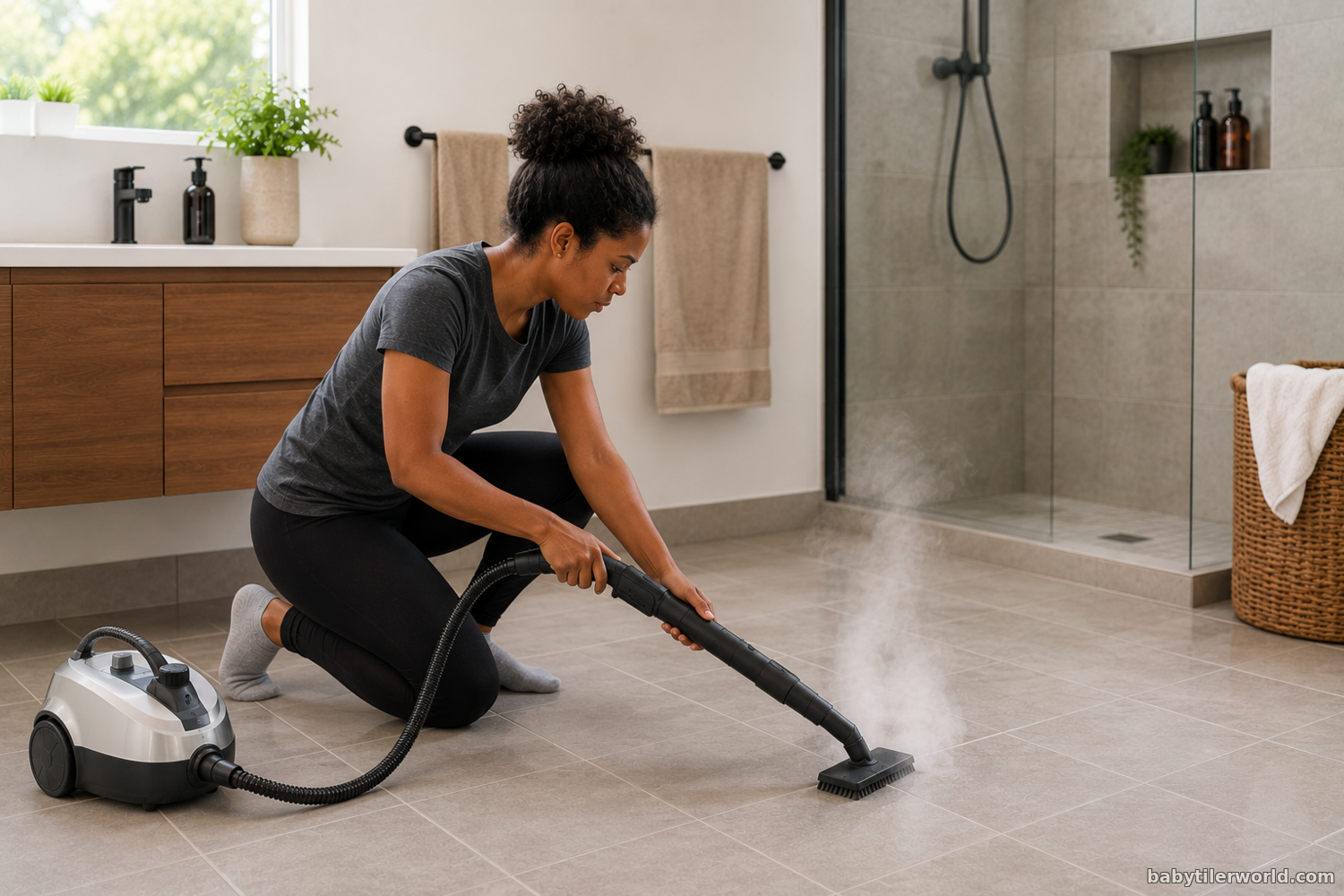
Can You Use Steam Cleaners?
Yes.
Most glazed ceramic tiles respond well to steam cleaning.
Steam:
* Loosens dirt
* Kills many germs
* Reduces chemical use
* Cleans textured surfaces
However:
Avoid steam if grout is cracked or damaged because moisture may penetrate beneath the tiles.
Cleaning Schedule
Daily
* Sweep high-traffic areas
* Wipe spills immediately
Weekly
* Vacuum thoroughly
* Mop floors
* Wipe wall tiles
Monthly
* Deep clean grout
* Inspect grout lines
* Remove soap scum
* Clean corners
Every Six Months
* Perform a full deep clean
* Check for loose tiles
* Inspect grout for cracks
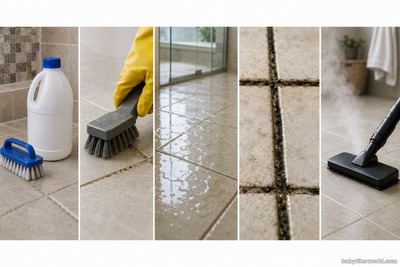
Common Mistakes to Avoid
Using Too Much Soap
Soap residue attracts dirt.
Less soap creates cleaner floors.
Using Steel Wool
Steel wool scratches glazed ceramic tiles.
Those scratches permanently trap dirt.
Skipping the Rinse
Leftover detergent dulls the finish.
Always rinse.
Ignoring Grout
Clean grout makes the entire floor look newer.
Using Harsh Chemicals Every Week
Powerful cleaners should be occasional solutions, not everyday products.
Letting Spills Sit
Coffee, wine, tomato sauce, and cooking oil become harder to remove the longer they remain.
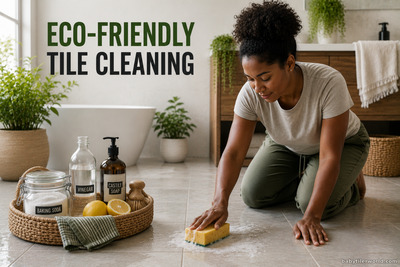
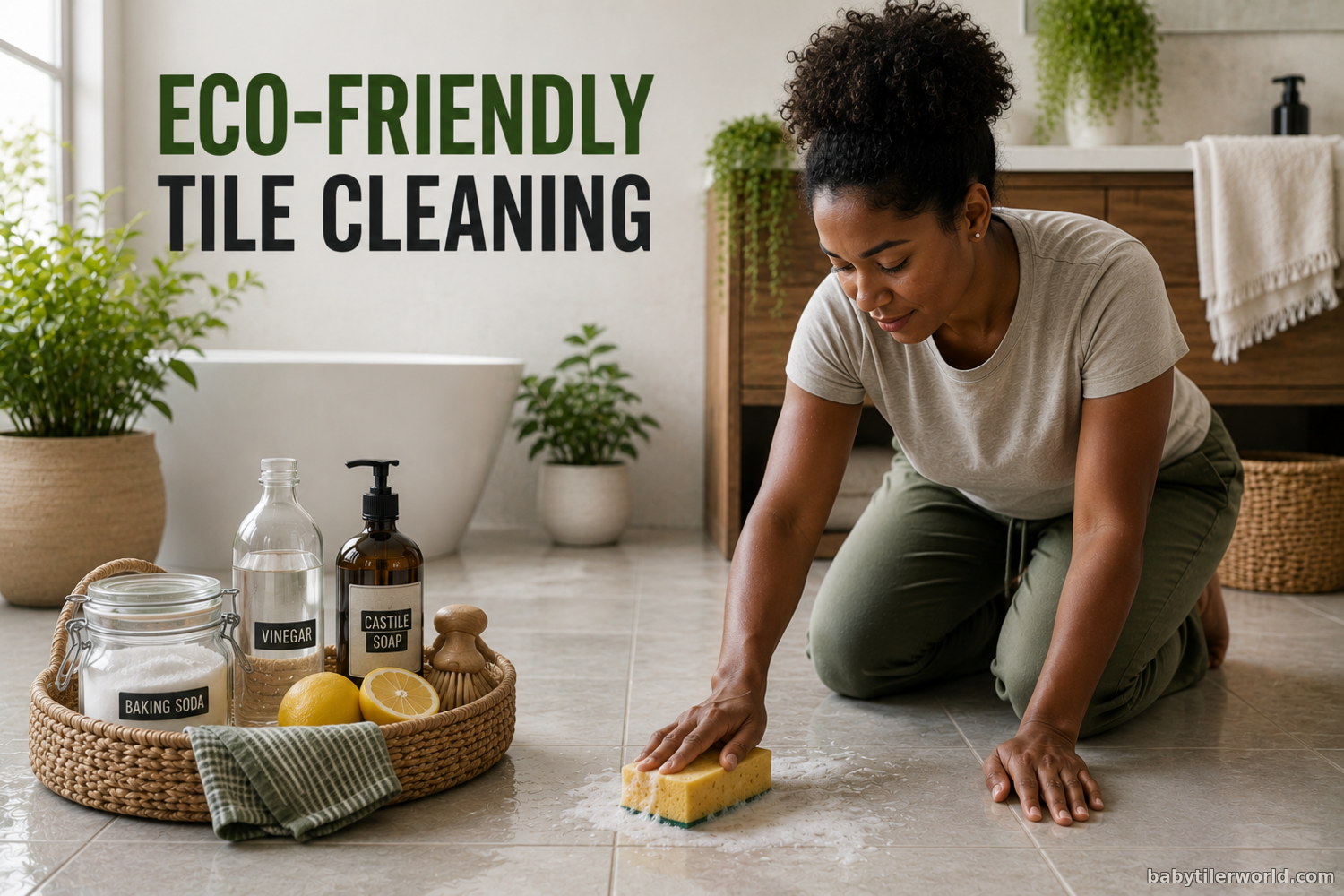
Eco-Friendly Tile Cleaning
If you prefer environmentally friendly cleaning, stick to:
* Warm water
* Mild dish soap
* Baking soda
* Microfiber cloths
These simple materials handle most cleaning tasks while reducing unnecessary chemical exposure.
Professional Tips for Long-Lasting Ceramic Tiles
Professional tile installers recommend prevention more than correction.
Here are simple habits that dramatically reduce cleaning time:
* Remove shoes indoors.
* Place doormats at entrances.
* Sweep regularly.
* Wipe spills immediately.
* Clean grout monthly.
* Avoid dragging heavy furniture.
* Improve bathroom ventilation.
* Use felt pads under furniture legs.
These habits protect both the tiles and the grout.
Frequently Asked Questions
What is the best cleaner for ceramic tiles?
Warm water mixed with a few drops of mild dish soap is usually the safest and most effective cleaner for everyday use.
Can vinegar damage ceramic tiles?
Occasional use of diluted white vinegar on glazed ceramic tiles is generally acceptable for removing soap scum or mineral deposits. Avoid frequent use on grout and never use vinegar on natural stone.
Can I use bleach?
Bleach should only be used occasionally for disinfecting or removing mold, and it should always be diluted according to the product instructions. Frequent use may weaken grout.
Why do my ceramic tiles still look dirty after mopping?
Possible reasons include:
* Dirty mop water
* Soap buildup
* Hard water residue
* Dirty grout
* Not rinsing after mopping
Should ceramic tiles be waxed?
No.
Most glazed ceramic tiles are designed to shine naturally and do not require wax. Wax can create buildup that attracts dirt and makes future cleaning more difficult.
How often should I deep clean ceramic tiles?
A thorough deep cleaning every three to six months is sufficient for most homes, although kitchens and bathrooms may benefit from more frequent attention due to grease and moisture.
Final Thoughts
Ceramic tiles are designed to withstand everyday life, but even the toughest surfaces benefit from regular care. A simple routine of sweeping, gentle mopping, rinsing, and occasional grout cleaning is usually enough to keep them looking fresh for many years.
The key isn't using stronger chemicals. It's using the right methods consistently. Mild cleaners, soft tools, and prompt attention to spills will protect both the glazed surface and the grout, preserving the beauty of your tile installation for decades.
Whether your ceramic tiles are in the kitchen, bathroom, hallway, or living room, following the steps in this guide will help maintain a cleaner, healthier, and more attractive home.
|